Laser and light treatments, explained
Laser and light treatments can target hair, pigment, redness, texture, and mild skin laxity. Here is a calm, plain-English guide to what they may do, what they can cost, and what to ask before you choose.
What laser and light treatments are
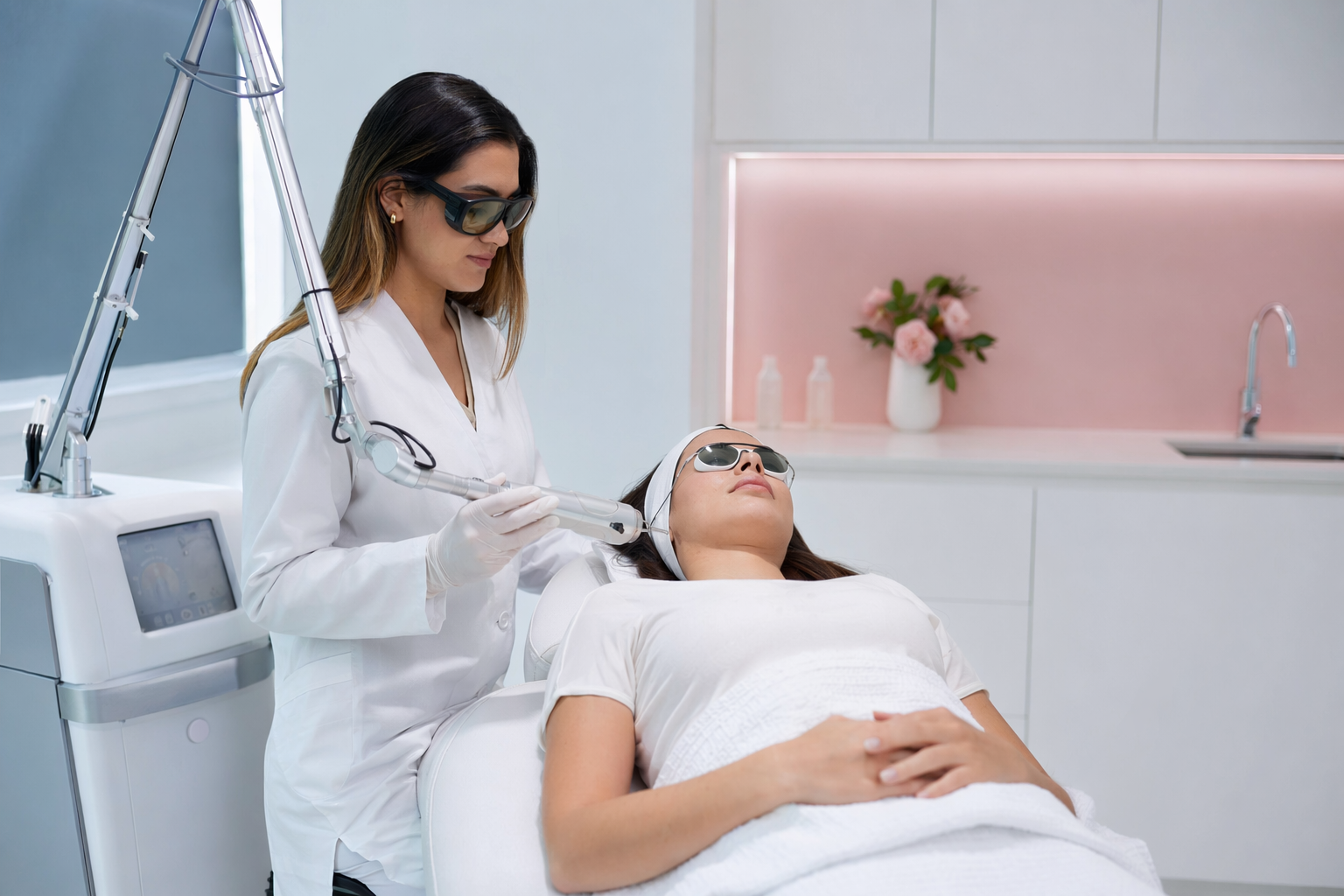
Laser and light treatments use focused energy on or under the skin. Different devices target different things. Some are used for unwanted hair. Some are used for sun spots, redness, visible vessels, acne marks, fine lines, or skin texture. Some devices warm deeper layers to support a firmer look over time.
This is a broad category, not one single treatment. "Laser treatment" can mean many different settings, wavelengths, and goals. A consultation should explain exactly what device is being used, what it is meant to target, how many sessions are often needed, and what recovery may be like.
Quiet Bloom is a free matching service. We help you find vetted local med spas to compare. We are not a doctor, clinic, or med spa, and we do not give medical advice. Please do not share health information with us. We only need basic contact details so we can help connect you.

Common types you may see at a med spa
One common option is laser hair removal. These treatments aim at pigment in the hair follicle to reduce future hair growth. Hair is usually treated in a series, because hair grows in cycles. It often works best when there is a clear contrast between hair color and skin tone, but newer devices may treat a wider range of skin tones than older ones. Results vary, and maintenance sessions may still be needed.
Another common option is IPL, often called a photofacial. IPL is not exactly the same as a laser. It uses broad-spectrum light and is often used for visible sun damage, some brown spots, and redness. It may help even out the look of skin tone, but it is not right for every concern or every skin tone.
Laser resurfacing can be lighter or more intense. Some treatments focus on gentle refreshment with limited downtime. Others are stronger and may target texture, fine lines, acne scars, or deeper signs of sun damage, but they can involve more recovery. There are also non-ablative and ablative approaches, and the difference matters.
You may also hear about light-based or energy-based skin-tightening devices. These aim to warm tissue below the surface to support gradual tightening or collagen remodeling. They may suit people looking for modest improvement without surgery. They do not create the same change as a surgical lift, and expectations should stay realistic.
If you are still sorting through options, our treatments page can help you compare categories in simple language.
Who should perform these treatments
Who performs the treatment matters. Laser and light devices can cause burns, pigment changes, scarring, eye injury, or disappointing results when used incorrectly. The person treating you should be trained on that specific device, know how to adjust settings for different skin tones and goals, and know when a treatment is not a good fit.
Rules about ownership, supervision, and who may perform med spa treatments vary by state. In many places, a med spa generally needs medical oversight, often from a supervising physician, but the exact rules are not the same everywhere. Do not assume every provider follows the same model.
Ask who will actually do the treatment, what license or credentials they hold, how often they perform that treatment, and what medical oversight is available if something goes wrong. You can read more here: who performs med spa treatments.
It is also wise to compare more than one provider. Never sign or pay under pressure. A careful consultation should feel clear, not rushed.
What they may help with — and who they may suit
Laser and light treatments may suit people who want a non-surgical option for a specific concern. That may include reducing unwanted hair, softening the look of sun spots, calming visible redness, improving uneven tone, refreshing texture, or seeking mild tightening over time.
The best fit depends on your skin tone, hair color, treatment area, schedule, budget, comfort with downtime, and how much change you hope to see. Some people prefer a gradual series with less recovery. Others may choose a stronger treatment and plan for more downtime. Neither path is automatically better.
Not every treatment is ideal for every person. Some devices are less suitable for some skin tones or for recently tanned skin. Some concerns that look similar may respond very differently. A good consultation should explain why a treatment was suggested, what the likely trade-offs are, and what realistic results may look like for you.
Bring questions. You can use this checklist: what to ask at a med spa consultation.
Comfort, downtime, costs, and risks
Comfort levels vary a lot. Laser hair removal is often described as quick snaps or heat. IPL may feel similar. Stronger resurfacing can be more intense and may involve numbing, cooling, or other comfort measures. Skin-tightening devices may feel hot, prickly, or deeply warm. Ask what the treatment usually feels like, how long it takes, and what aftercare is typical.
Downtime also varies. Some lighter treatments may leave only temporary redness for hours to a day or two. Stronger resurfacing can mean several days to a few weeks of visible recovery, depending on the device and settings. You may need to avoid sun exposure, heat, workouts, or certain skin products for a period of time.
Med spa treatments are usually cash-pay and often not covered by insurance. Price depends on the device, the area treated, your location, and the number of sessions. Realistic ranges you may see include:
- Laser hair removal: about $100-$500+ per session for small to medium areas, and $250-$900+ for larger areas
- IPL or photofacial: about $250-$700+ per session
- Laser resurfacing: about $500-$3,500+ per session, with stronger treatments usually costing more
- Skin-tightening devices: about $500-$2,500+ per session or treatment area
Pros can include a non-surgical approach, targeted treatment, and gradual improvement for the right concern. Cons can include multiple sessions, ongoing maintenance, cost, temporary discomfort, recovery time, and results that may be subtle or uneven.
Risks may include redness, swelling, blistering, burns, irritation, pigment changes, acne flare, infection, scarring, and eye injury if proper protection is not used. Results vary by person, provider, treatment, and state. No treatment is risk-free.
How to choose calmly
Try not to choose based on a special offer alone. Ask what exact device is being used, why it was chosen for your goal, how many sessions are often recommended, what total cost may look like, and what happens if you are unhappy with the plan. Clear answers matter more than fancy words.
It can help to compare two or three local providers. Verify credentials and oversight yourself. Ask for written pricing, expected downtime, and aftercare instructions before you agree. Imagery on websites or social media is often illustrative only and should not be treated as a promise of your results.
If you want a calmer starting point, Quiet Bloom can get you matched with vetted local med spas. Our service is free. We only collect contact details like your name, phone, city, ZIP, and optional email or language preference. Please do not send us medical details.
Common questions
What is the difference between IPL and a laser?
IPL uses broad-spectrum light, while a laser uses a more focused wavelength. Both may help with certain skin concerns, but they are used differently, and one is not automatically better for every person or skin tone.
How many sessions do laser hair removal treatments usually take?
Many people are told to expect a series, often around 6 to 8 sessions or more, spaced over time. The number can vary based on the area, hair cycle, hair color, skin tone, and the device used.
Do laser and light treatments hurt?
Comfort varies by treatment and by person. Some people feel quick snaps, heat, or stinging, while stronger resurfacing may be more uncomfortable and may involve numbing or cooling.
How much do these treatments usually cost?
They are usually cash-pay. Rough ranges are about $100-$500+ per session for smaller laser hair removal areas, $250-$700+ for IPL, $500-$3,500+ for laser resurfacing, and $500-$2,500+ for some skin-tightening treatments.
Can Quiet Bloom tell me which treatment is right for me?
No. We are not a medical provider and do not give medical advice. We offer general education and free matching to vetted local med spas, and we ask you not to share health information with us.
Always choose a med spa with proper medical oversight, verify credentials yourself, and ask about risks and costs in writing before any treatment.